


How strong are products made with rotational moulding?
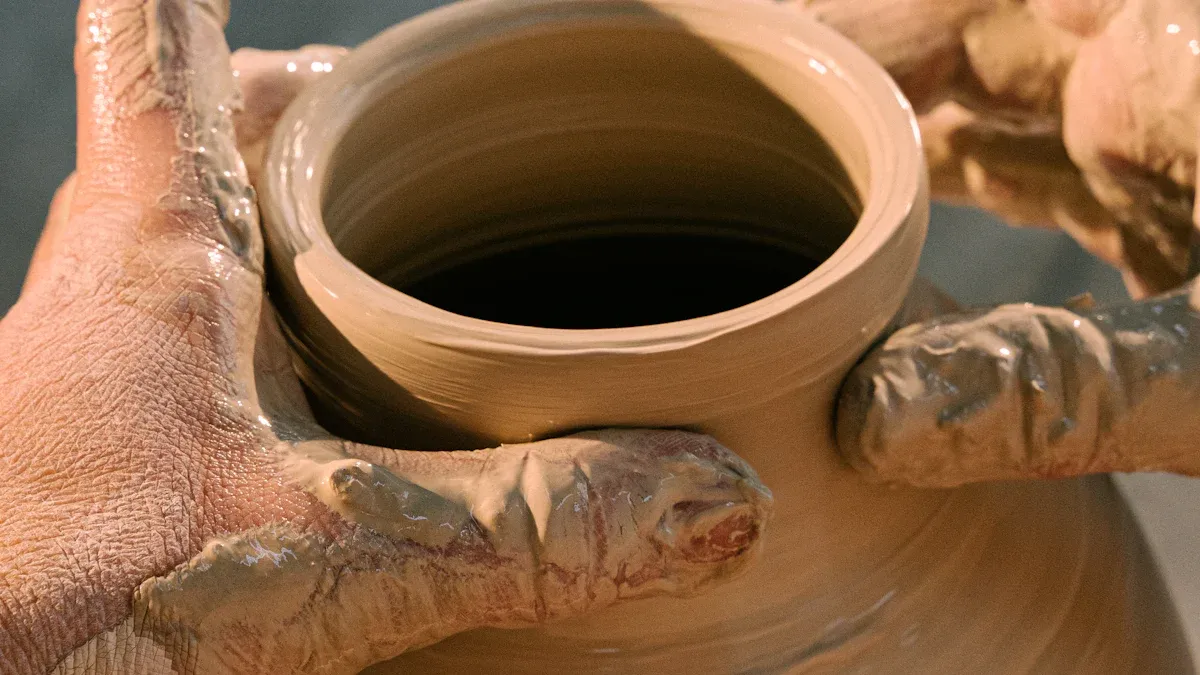
Rotational moulding gives you products that stand up to tough jobs. You see these in fuel tanks, road barriers, and kayaks. The seamless build and thick, uniform walls help each item resist heavy impacts. When manufacturers blend recycled HDPE with LLDPE, they boost both tensile strength and impact resistance.
Key Takeaways
- Rotational moulding products gain strength from using tough plastics like HDPE and from thick, even walls that resist cracks and impacts.
- Smart design features such as rounded corners, reinforcing ribs, and seamless construction make products more durable and leak-proof.
- Compared to injection and blow moulding, rotational moulding creates stronger, longer-lasting products with lower tooling costs and better resistance to stress and wear.
What Affects the Strength of Rotational Moulding Products?
When you look at products made with rotational moulding, you might wonder what makes them so tough. The answer lies in the materials, the way the walls are formed, and the smart design choices that go into each product.
Material Selection and Its Role in Strength
The type of plastic you choose for rotational moulding shapes how strong your product will be. Most manufacturers use different kinds of polyethylene, such as LDPE, MDPE, and HDPE. Each type brings its own strengths:
| Polyethylene Type | Mechanical Properties | Additional Characteristics |
|---|---|---|
| LDPE | Tough, flexible | Good for flexible parts |
| MDPE | Better mechanical properties than LDPE | Intermediate properties |
| HDPE | Highest mechanical properties and chemical resistance | Suitable for structural strength and durability |
| POE | Highly flexible, high impact | Elastomeric properties |
| XLPE | Improved thermal and chemical resistance | Cross-linked for enhanced stress crack resistance |
You get better impact resistance with MDPE, while HDPE gives you higher tensile strength. Some products use polypropylene or polycarbonate for special needs, like higher temperature resistance or extra clarity. When you add fibers or fillers, such as glass fibers or natural fibers like flax, you can boost strength even more. Treated fibers stick better to the plastic, making the whole product tougher. Additives can also help your product stand up to heat, chemicals, and wear.
Tip: The right mix of polymer and additives can make your product last longer and perform better in harsh conditions.
Wall Thickness and Uniformity
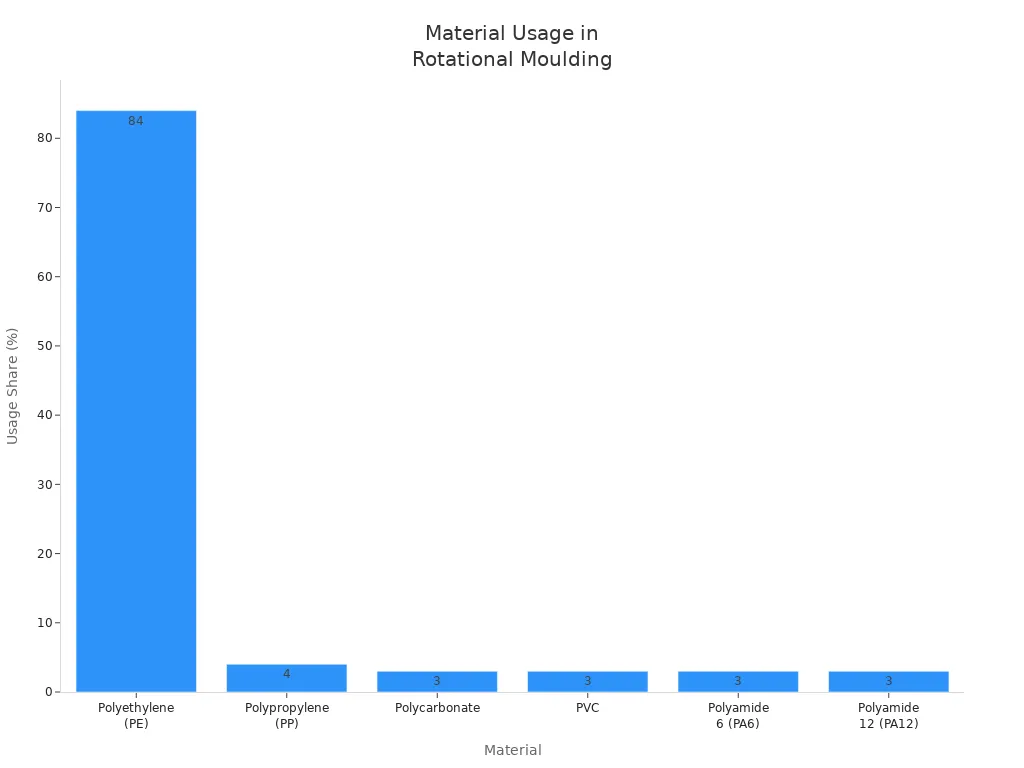
Wall thickness plays a huge role in how strong your rotational moulding product will be. Uniform walls help your product resist impacts and avoid weak spots. If the walls are too thick in some places and thin in others, you might see warping, cracks, or even leaks. Keeping the wall thickness within about 10% across the whole product is a common practice.
- Uniform wall thickness prevents warping and internal stresses.
- Gradual transitions between thick and thin areas help avoid defects.
- Sharp corners can cause thin spots and weak points, so rounded corners are best.
- The process of rotational moulding lets you create seamless products with even walls, which means fewer places for cracks or leaks to start.
When you design tanks or containers, you need to follow standards like ASTM D1998. This standard helps you figure out the right wall thickness based on the size, shape, and pressure the tank will face. Using the right resin and keeping the walls even makes your product safer and longer-lasting.
Design Features That Boost Durability
Smart design choices make a big difference in how well your product stands up to daily use. Here are some features that help:
- Large, rounded corners spread out stress and keep wall thickness even.
- Reinforcing ribs add strength without making the product too heavy.
- Hollow gussets and kiss-offs help support flat areas and prevent bending.
- Seamless construction removes weak points like welds or joints, making the product less likely to leak or break.
- Double walls and internal supports can handle bigger loads and impacts.
Note: Seamless products are especially good for holding liquids or chemicals because they do not have joints that could leak.
You also need to think about how the product will be used. For example, if it will hold heavy loads or face rough handling, adding ribs or thicker walls in key spots can help. Testing in the lab and in real-world conditions, like drop tests or chemical exposure, shows that these design features really work. Products made with rotational moulding often pass tough standards for strength and durability, even in industries like aerospace and defense.
By choosing the right materials, keeping walls even, and using smart design features, you can make rotational moulding products that last for years—even in the harshest environments.
Rotational Moulding Strength Compared to Other Methods

Rotational Moulding vs. Injection Moulding
When you compare rotational moulding to injection moulding, you notice big differences in how each product handles stress. Injection moulded products often fail by brittle cracking or shear. This happens because the fibers inside the plastic do not always line up well, especially at normal or low temperatures. At higher temperatures, you might see buckling or cracks form because the material does not spread out stress evenly.
| Failure Mode | Description | Cause/Influencing Factors | Conditions Observed |
|---|---|---|---|
| Shear Failure | Misalignment of fibers in the failure zone due to shearing of the specimen | Fiber misalignment and nonuniform fiber distribution | Predominantly at normal and lower temperatures; brittle fracture |
| Buckling/Crack Formation | Two zones buckled in opposite directions creating cracks/voids | Local nonuniform material properties, irregular fiber distribution, lower fiber content near voids | Mostly at high temperatures; possible creep influence |
Rotational moulding creates products with no internal stress from the manufacturing process. The walls are thick and even, and the plastic does not have a set direction for its molecules. This makes the product strong and less likely to crack or break, even after years of use. For example, pallets made with rotational moulding can handle rough treatment, like being dropped or hit by forklifts, without breaking. Injection moulded pallets, on the other hand, tend to crack more easily and do not last as long in tough environments.
You also get better creep resistance with rotational moulding. Creep is when a material slowly changes shape under a constant load. Because rotational moulding does not stretch or stress the plastic during production, your product keeps its shape and strength for decades.
Tip: If you need a product that will last a long time and handle rough use, rotational moulding gives you a clear advantage over injection moulding.
Rotational Moulding vs. Blow Moulding
Blow moulding and rotational moulding both make hollow plastic products, but the strength of each product can be very different. Blow moulding usually creates parts with thin walls. These parts work well for simple shapes, like bottles or small containers, but they do not have the same strength as thicker-walled products.
| Process | Wall Thickness | Product Strength |
|---|---|---|
| Blow Molding | Thinner walls | Less strong |
| Rotational Molding | Thicker walls | More strong |
Rotational moulding lets you make products with much thicker walls. This extra thickness means your product can handle bigger impacts and heavier loads. You can also create more complex shapes and add features like double walls or foam filling for even more strength. Blow moulding gives you better control over wall thickness, but the walls stay thin, so the product is not as strong.
You will also find that rotational moulding has lower tooling costs. Blow moulding tools cost much more, sometimes six to ten times higher. If you want to make a strong, complex part without spending a lot on tools, rotational moulding is a smart choice. However, blow moulding works faster, so it is better for making lots of simple parts quickly.
Rotational Moulding vs. Traditional Fabrication
Traditional fabrication methods for large plastic products include injection moulding, structural foam moulding, and rotational moulding. Each method has its own strengths. Structural foam moulding makes solid parts with high impact resistance and tight size control. Rotational moulding stands out when you need strong, hollow parts with complex shapes.
| Fabrication Method | Description & Applications | Strength Characteristics & Design Features |
|---|---|---|
| Rotational Molding | Produces hollow parts by rotating a mold on two axes without pressure; suitable for small to large parts. | Strong, durable hollow parts; can have double walls and foam filling for enhanced strength, rigidity, insulation, or buoyancy. |
| Used for complex geometries including enclosures for business, consumer, and medical equipment. | Allows complex outside geometries and undercuts; wall thickness variable; cannot mold ribs or thin wall transitions. | |
| Structural Foam Molding | Low-pressure injection molding with inert gas to create a cellular foam core and solid outer surfaces. | Produces large, solid, durable parts with high impact resistance and tighter tolerances than rotational molding. |
| Suitable for large panels, housings, enclosures, pallets, carts, and shelving; geared to higher volume runs. | Can mold ribs and bosses; better part-to-part consistency; limited in molding undercuts compared to rotational molding. |
You see rotational moulding used in products like fishing boats, buoys, and construction parts. These products last a long time, resist corrosion, and need little maintenance. For example, rotomolded fishing boats stay afloat even if they capsize, thanks to their buoyant, seamless design. In civil construction, you find sinks, bathtubs, and insulation blocks made with rotational moulding because they meet strict durability standards.
Note: Rotational moulding often uses recyclable materials and creates very little waste. You can recycle scrap and off-cuts, and the process does not release harmful chemicals. This makes it a good choice if you care about the environment.
When you look at costs, rotational moulding has lower tooling expenses. You pay less to get started, especially if you only need a small or medium number of parts. The process takes longer, so it is not as fast as injection moulding for huge orders. However, the products you get are strong, last longer, and need fewer repairs or replacements.
You can trust rotational moulding to deliver strong, reliable products for tough jobs.
- Tanks and containers last outdoors in farming and water management.
- Automotive and outdoor gear stay tough and weather-resistant.
- One-piece construction and even walls help your products resist cracks and leaks.
FAQ
How long do rotational moulded products last?
You can expect these products to last for decades. The seamless design and thick walls help them resist weather, impacts, and chemicals.
Can you recycle rotational moulded products?
Yes, you can recycle most rotational moulded products. Many manufacturers use recycled plastics to make new items, which helps reduce waste.
What are common uses for rotational moulded products?
- Water tanks
- Playground equipment
- Kayaks
- Road barriers
These products work well outdoors and in tough environments.